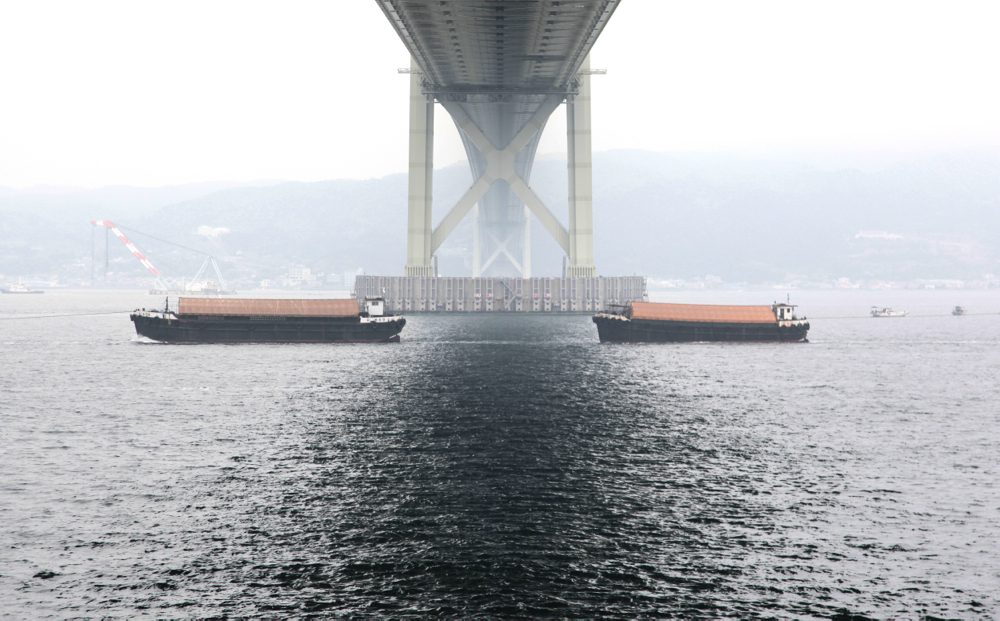
Akashi Bridge
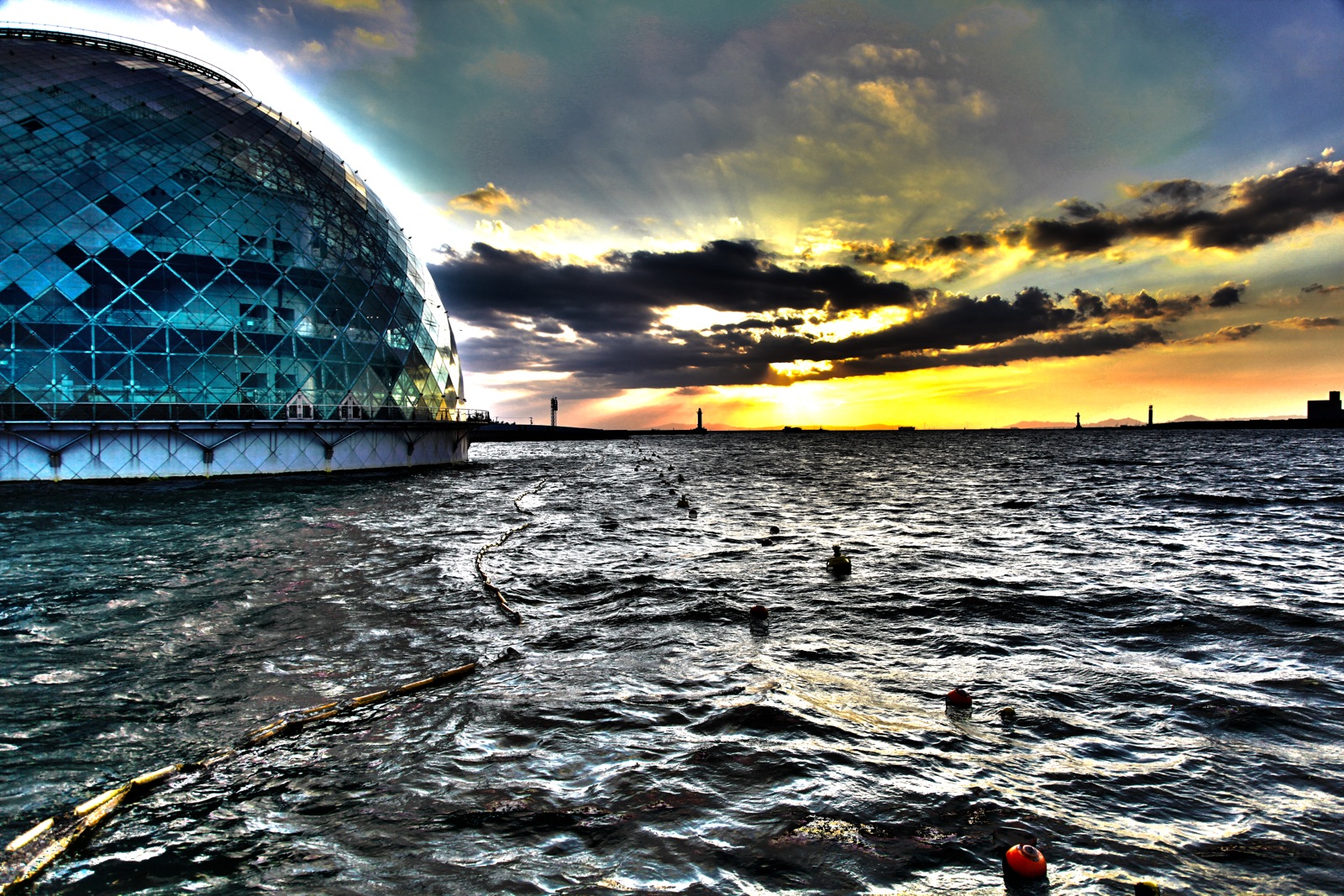
The Akashi-Kaiky Bridge, also known as the Pearl Bridge, has the longest central span of any suspension bridge, at 1,991 meters (6,532 ft). It is located in Japan and was completed in 1998.The bridge links the city of Kobe on the mainland of Honshu to Iwaya on Awaji Island by crossing the busy Akashi Strait. It carries part of the Honshu-Shikoku Highway.
The bridge is one of the key links of the Honshu-Shikoku Bridge Project, which created three routes across the Inland Sea.
Source: Wikipedia: http://en.wikipedia.org/wiki/Akashi_Kaiky%C5%8D_Bridge
Various Photos of Japan 2
- Tennoji
- sample plastic food infront of Royal Host
- Cold winter in Kansai
- Aids for victims of Tsunami Friday, 11 March 2011
- Crocodile Dundee
First Morning 2012
Hatsumode, hatsuhinode, the “firsts” of the year
Celebrating the new year in Japan also means paying special attention to the first time something is done in the new year.
Hatsuhinode is the first sunrise of the year. Before sunrise on January 1, people often drive to the coast or climb a mountain so that they can see the first sunrise of the new year.
Hatsumode is the first trip to a shrine or temple. Many people visit a shrine after midnight on December 31 or sometime during the day on January 1. If the weather is good, people often dress up or wear kimono.
In addition to the other firsts mentioned above (“first sun” (hatsuhi) or “first sunrise”, “first laughter” (waraizome—starting the New Year with a smile is considered a good sign), first dream (hatsuyume), and “first letter” (hatsudayori—meaning the first exchange of letters) – in addition to haiku-specific ones), other “firsts” that are marked as special events include shigoto-hajime (the first work of the new year), keiko-hajime (the first practice of the new year), hatsugama (the first tea ceremony of the new year), and the hatsu-uri (the first shopping sale of the new year).
Here you will see the first visit to temple. Please enjoy the pictures and wish you all great 2012.
Source: Wikipedia.
Autumn 2011
- Train to Nara
- Train to Nara
- Autumn leaves in Nara
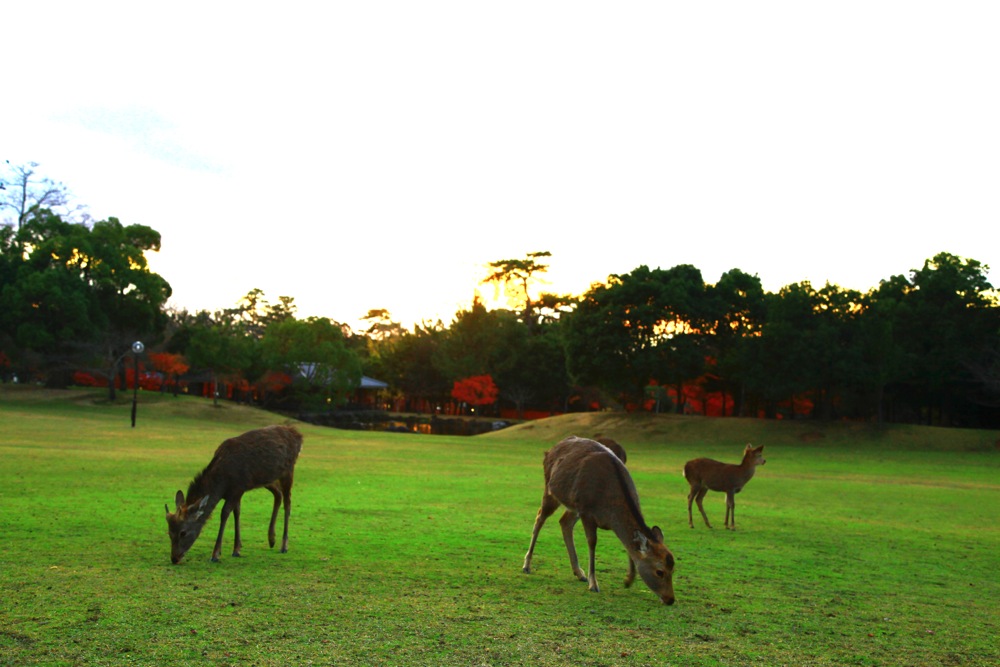
- Deers enjoying the green grass
- Lake
- 2 series Momiji in Nara
- Nara 2011
- Nippon
Dotonbori
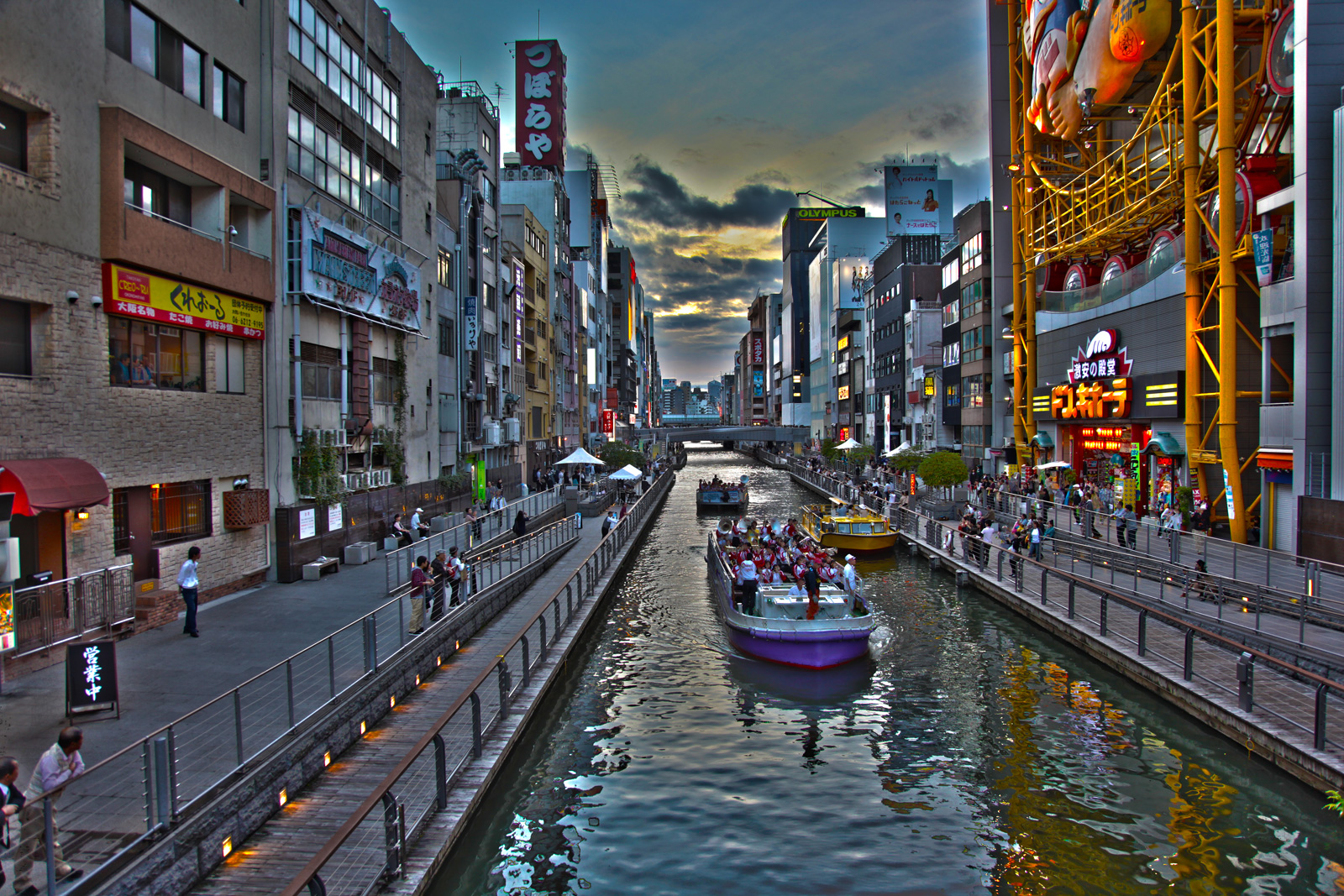
Dotonbori, is one of the principal tourist destinations in Osaka, Japan. It is a single street, running alongside the Dotonbori canal between the Dotonboribashi Bridge and the Nipponbashi Bridge in the Namba ward of Osaka. A former pleasure district, Dotonbori is famous for its historic theaters (all gone now), its shops and restaurants, and its many neon and mechanized signs, including snack/candy manufacturer Glico’s giant electronic display of a runner crossing the finish line.
History
Dotonbori traces its history back to 1612, when a local entrepreneur, D?ton Yasui, began expanding the tiny Umezu River, which ran east to west, hoping to increase commerce in the region by connecting the two branches of the Yohori River, which ran north to south, with a canal. D?ton’s project was interrupted when he died defending Toyotomi Hideyori in the ill-fated Siege of Osaka, but his cousins finished the canal in 1615. The new lord of Osaka Castle, Tadaki Matsudaira, named the canal and avenue beside it Dotonbori (“bori” from “hori”, meaning “canal”), even though Doton had been on the losing side during the siege.
The character of Dotonbori became defined in 1621 when the newly minted Tokugawa Shogunate instituted urban planning, designating Dotonbori as the entertainment district of Osaka. By 1662 the avenue boasted six Kabuki theaters and five Bunraku theaters, as well as the unique Takeda Karakuri mechanical puppet theater. Many restaurants and cafes were built to cater to the flood of tourists and entertainment-seekers pouring nightly into Dotonbori.
Over the years, declining interest in traditional forms of entertainment led to the closing of most of Dotonbori’s original attractions. Its five remaining theaters were bombed and destroyed during World War II.
Okonomiyaki in Namba
Okonomiyaki is a Japanese savory pancake containing a variety of ingredients. The name is derived from the word okonomi, meaning “what you like” or “what you want”, and yaki meaning “grilled” or “cooked” (cf. yakitori and yakisoba). Okonomiyaki is mainly associated with Kansai or Hiroshima areas of Japan, but is widely available throughout the country. Toppings and batters tend to vary according to region. Tokyo okonomiyaki is usually smaller than a Hiroshima or Kansai okonomiyaki.
Kansai- or Osaka-style okonomiyaki is the predominant version of the dish, found throughout most of Japan. The batter is made of flour, grated yam, water or dashi, eggs and shredded cabbage, and usually contains other ingredients such as green onion, meat (generally pork or bacon), octopus, squid, shrimp, vegetables, kimchi, mochi or cheese. Okonomiyaki is sometimes compared to an omelette or a pancake and may be referred to as “a Japanese pancake” or even “Osaka soul food”.
Source: Wikipedia.
- Its called teppan yaki, and here you will mix theraw ingredients to make “okonomiyaki”
- This time, “Buta Okonomiyaki” Pork meet but could be bacon
- Raw ingredients over “teppan”
- shape it with metal spatula
- Pork meet over the mixed raw
- 5 minutes
- 5 minutes
- Almost done after 10 minutes over the “teppan”
- Typical Japanese style “Okonomiyaki restaurant in Namba”
- Waitress didn’t like me taking photos all the time
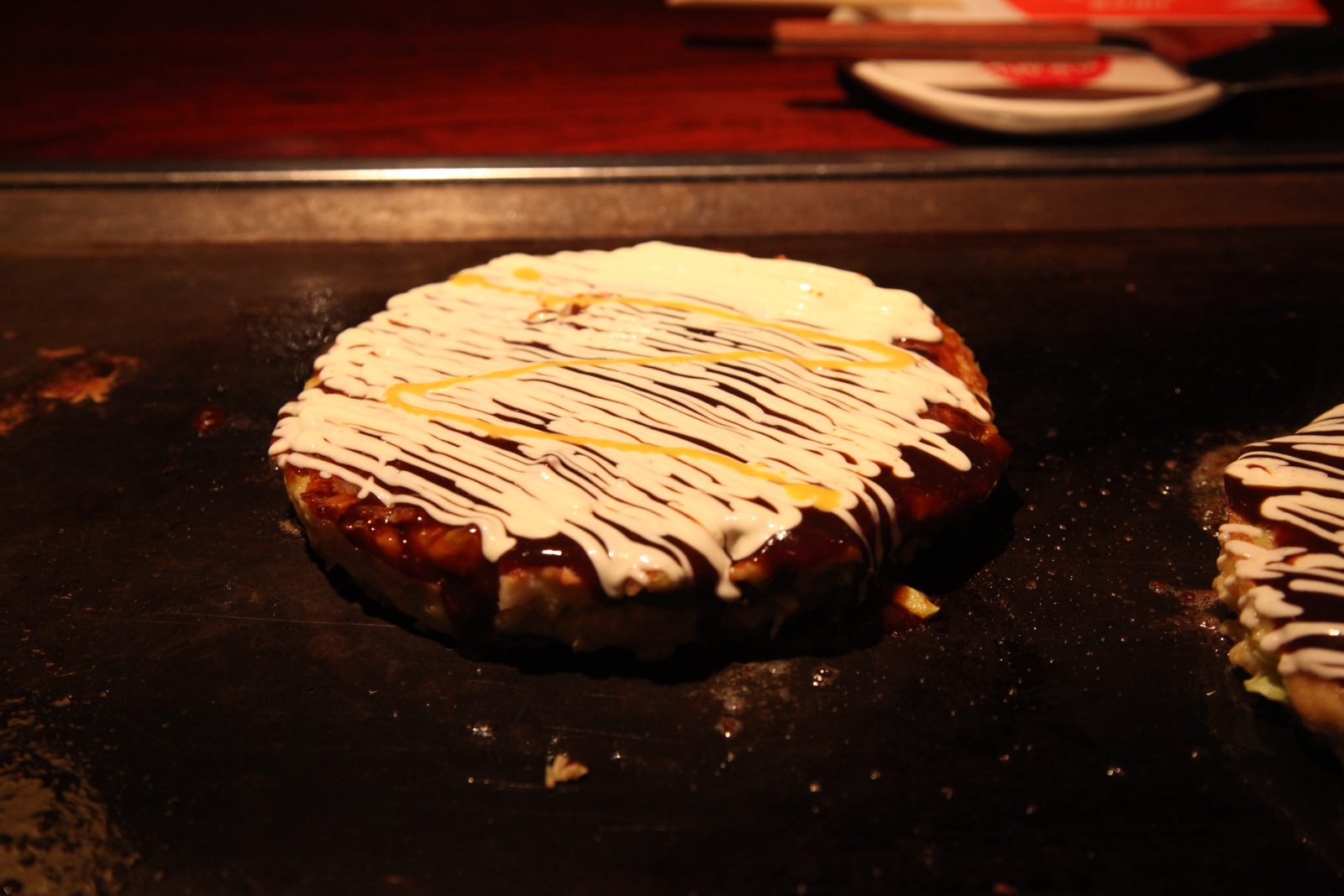
- Cover with yummy Mayonnaise and a bit of spicy mustard
- fully seasoned with sauce, mayonnaise and katsuobushi dried, fermented, and smoked tuna
- and after 10 minutes you are ready to get another great experience in the typical Namba cuisine
- you can used “ohashi” or better and easier with this metal spatula
Set “Asahi” cold delicious draft beer and Okonomiyaki for only 900 yens, ( 12 USD)
Various Photos of Japan – 2
- “Narazuke” kind of pickles with a bit of alcohol
- “Takoyaki”
- Inside of Shinkansen
- Shoes locker in the entrance of Izakaya (japanese restaurant)
- free reading spot at Shinsaibashi
- someone here doesn’t belong to the “Harley Group”
WIDGETS NEEDED!
Go ahead and add some widgets here! Admin > Appearance > Widgets


Posted under: